

Terrence Lyons, Professor of Conflict Resolution
Terrence Lyons focuses his research on comparative peace processes and post-conflict politics, with a regional emphasis on Africa. His most recent scholarship asks how the nature of war termination shapes post-war politics and how some insurgent groups transform into political parties. He has written or co-written five books and co-edited a further four. His most recent book, The Puzzle of Ethiopian Politics (2019) focuses on how the war-to-peace transition following a protracted civil war explains conflicts in Ethiopia today. His scholarship has appeared in such journals as Comparative Politics and International Political Sociology, as well as more policy-oriented publications such as the Journal of Democracy and the Washington Post.
Lyons maintains interests in policy relevant discussions. He has consulted with the Department of State, United States Agency for International Development, the United Nations, and key think tanks such as the Brookings Institution, the Center for Strategic and International Studies, and the Council on Foreign Relations. He has also served as an election observer in Ethiopia, Eritrea, Ghana, Benin, and Bangladesh and was the Senior Advisor to the Carter Center in Liberia and Ethiopia. In March 2017, he testified before the House Subcommittee on Africa and Global Health on the crisis in Ethiopia.
Lyons teaches classes such as the Introduction to Conflict Analysis, globalization and conflict, and specialized seminars on contentious politics and civil wars.
https://carterschool.gmu.edu/profiles/tlyons1
“Linking Variation in Civil War to Variation in Post-War Governance.”
Co-written with Billy Agwanda. African Security 18:1 (2025): 34-57.
https://www.tandfonline.com/doi/full/10.1080/19392206.2025.2461904
“The Puzzle of Ethiopian Politics”
Terrence Lyons. (2019) ISBN: 978-1-62637-798-1
https://www.rienner.com/title/The_Puzzle_of_Ethiopian_Politics
“Asymmetric Electoral Authoritarianism? The Case of the 2021 Elections in Ethiopia.” Co-written with Aly Verjee. Review of African Political Economy 49: 172 (2022): 339-354.
https://www.jstor.org/stable/48676595?seq=1
Book talk, USIP
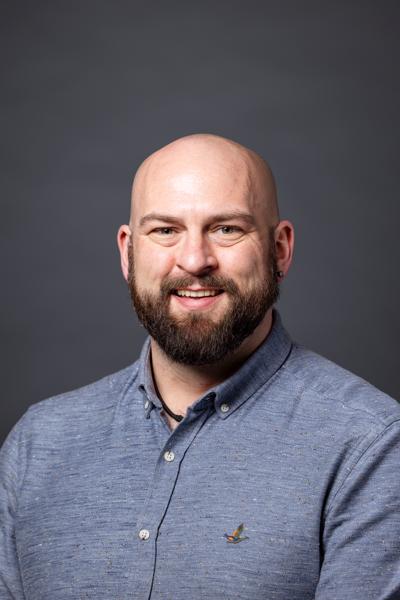
Douglas Irvin-Erickson, Associate Professor of Conflict Analysis
Douglas Irvin-Erickson is a political theorist and diplomatic historian working in the area of international criminal law, global justice, and genocide prevention. At the Carter School, he Irvin-Erickson is an Associate Professor of Conflict Analysis and Resolution and director of the Genocide Prevention Program. He is currently writing a book on a global history of local efforts to prevent genocide and other mass atrocity crimes.
Irvin-Erickson is a Senior Fellow with the Alliance for Peacebuilding, a Board Member of the Institute for the Study of Genocide, and a member of the editorial board of Genocide Studies and Prevention: An International Journal. He has held teaching positions at Rutgers University, The City University of New York, and Gratz College. He holds a Ph.D. in Global Affairs and an M.A. in English Literature from Rutgers University, in Newark, NJ, USA.
https://carterschool.gmu.edu/profiles/dirviner

Agnieszka Paczynska, Professor
Agnieszka Paczyńska’s research focuses on the relationship between economic and political change and conflict, development and conflict, security-development nexus, post-conflict reconstruction policies and peacebuilding, emerging donors and peacebuilding, the relationship between globalization processes and local conflicts, and peace and conflict resolution pedagogy. She is the author Teaching Peace and Conflict Studies: Engaged Learning and Inclusive Theory (with Susan Hirsch, Edward Elgar Publishing) and State, Labor and the Transition to a Market Economy: Egypt, Poland, Mexico and the Czech Republic (Penn State University Press) and and editor of Changing Landscape of Assistance to Conflict-Affected States: Emerging and Traditional Donors and Opportunities for Collaboration (Stimson Center), Conflict Zone, Comfort Zone: Pedagogy, Methodology and Best Practices in Field-Based Courses (with Susan Hirsch, Ohio University Press), and The New Politics of Aid: Emerging Donors and Conflict-Affected States (Lynne Rienner Publishers). Her research has been published in Negotiation Journal, Frontiers in Political Science, Peacebuilding, Conflict Resolution Quarterly, Review of International Political Economy, PS Political Science and other peer-reviewed journals.
Her research has been supported by the Fulbright Foundation, United States Institute of Peace, U.S. Department of Education, Franklin Fellowship Program, Social Science Research Council, International Research Exchange Board and Woodrow Wilson International Center for Scholars among others. Her current projects focus on how states labeled as fragile engage in international debates about development assistance and on emerging donors and conflict-affected states.
Together with Susan Hirsch Paczyńska is co-editing a book series, Studies in Conflict, Justice, and Social Change, with the Ohio University Press. She has been a Nonresident Fellow at the Stimson Center and is the Chair of the Board of Directors of Saferworld USA and Member of the Board of Trustees of Saferworld. Most recently, she has also been a Visiting Professor at the Maria Curie Skolodowska University in Lublin, Department of Political Science (2018-2019) and Visiting Researcher at the German Institute of Development and Sustanability (IDOS) (Summer 2019), and Peacebuilding Advisor at Belun in Dili, Timor Leste (Fall 2020). Between 2020 and 2024 she served as the Chair of the Peace Studies Section of the International Studies Association and was a member of the International Studies Association’s Governing Council.
Paczyńska engages in policy relevant research and discussions. She has consulted for the United Nations, U.S. Department of State, United States Agency for International Development, and the Marine Corps Combat Development Command and has observed elections in Afghanistan, Egypt, Ethiopia and Liberia.
Most recently Paczyńska has been teaching classes such as Conflict in Development, Conflict Sensitive and Inclusive Peacebuilding, Global Conflict Analysis and Resolution, and Mobilizing for Change and Justice.
Education
PhD, Political Science, University of Virginia (2002)
MA, Political Science , New York University (1991)
BA, Political science, New York University (1989)